Picture-pretty brunette Margaret Lindsay was one of a number of
pleasant, sweet-natured ingénues who could do no wrong in a score of
1930s stylish Hollywood pictures. Such altruistic love interests were
often overlooked in pictures that were carried by the flashy
histrionics of a jaunty James Cagney or
temperamental Bette Davis, both of whom she
supported in several films. Ergo, while she was a lovely distraction
and a highly capable talent, Margaret failed to ignite and command the
attention of a truer star.
The Dubuque, Iowa-born lovely was christened Margaret Kies in real
life, the eldest of six (she had four sisters (Helen, Jane, Lori,
Mickie), one brother (Jack)). Her father, a druggist, enrolled her at
the National Park Seminary in Washington, DC. The acting bug hit
Margaret quite early, however, and she subsequently attended New York's
American Academy of Dramatic Arts to pursue her dream. Unable to find
work in New York, she traveled to England for further speech and acting
study. Here she made her professional stage debut and gained experience
and confidence in such plays as "Escape," "By Candlelight," and "Death
Takes a Holiday". With her resume now consisting of strong theatre
credits, she returned to the States hoping to finally make a mark on
Broadway, but again her career stalled. While waiting for a show of
hers to open following production delays (eventually she co-starred on
Broadway opposite Roland Young in
"Another Love Story"), Margaret had a number of screen tests arranged
for her. Shelving her Iowa-based roots, Universal took an interest in
the "British stage actress" and signed her on. She made her debut in
Okay America! (1932) and toiled
in a few minor roles before taking full advantage of her "English tea
rose" reputation with a small but noticeable part in the "all-British"
grand-scale epic film Kavalkade (1933)
as an optimistic honeymooner on board the fateful H.M.S.Titanic.
Warner Bros. then picked up her option and began featuring her
gracefully opposite such magnanimous stars as
Leslie Howard,
Douglas Fairbanks Jr.,
George Arliss and
Humphrey Bogart. "Americanized" as a
lead and second lead, she was able to drop the British pretense and
appeared opposite Cagney in
Der Frauenheld (1933),
Devil Dogs of the Air (1935),
Frisco Kid (1935) and
Der FBI-Agent (1935). The studio had her work
as a second-lead to Ms. Davis as well in such films as
Nebel über Frisco (1934) and
Stadt an der Grenze (1935). Of note, she
supported Davis in both her Oscar-winning "Best Actress" pictures --
Gefährliche Liebe (1935) and
Jezebel - die boshafte Lady (1938). She also took on a Davis
castoff role in
Im Garten des Mondes (1938), a
musical in which Margaret did not sing.
Margaret's longstanding problem was that she was either involved in
minor pictures that would do nothing to advance her career or was
handed oblique secondary roles in "A" pictures wherein she played the
star's best friend, light romantic rival or socialite. One of
Margaret's sisters, Jane Gilbert
was briefly an actress in the late 1930s/early '40s and was once
married to Perry Mason (1957)
co-star William Hopper, who
played private investigator Paul Drake.
Following one of her best roles as Hepzibah in
Nathaniel Hawthorne's
The House of the Seven Gables (1940),
Margaret signed up with Columbia in the recurring "Ellery Queen" series
(seven in all) as mystery writer Nikki Porter opposite either
Ralph Bellamy or
William Gargan's title crime solver.
Probably her best remembered role, this renewed popularity did not
guarantee "A" pictures and she remained for the most part in second
tier filming. One of her more atypical roles came as a man-baiting
saloon girl in
The Vigilantes Return (1947).
In the 1940s, she replenished her film resume with secondary ladylike
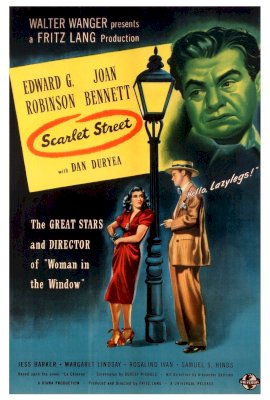
roles behind Joan Bennett in
Straße der Versuchung (1945),
Lana Turner in
Fesseln der Liebe (1947) and
Barbara Stanwyck in
B.F.'s Daughter (1948). Margaret
also sought work on TV and on the legit stage in the next decade. Her
final film was in typically pleasant mode as Nurse Colman in
Sandra und der Doktor (1963)
showcasing a nubile Sandra Dee.
Margaret never married in real life but remained close to her family.
Her dating companions were typically "safe" stars such as
Cesar Romero,
Richard Deacon, and even
Liberace. For much of her time in
Hollywood, Margaret shared a home with a close sister. She died at age
70 in Los Angeles of emphysema in the spring of 1981.