In her silent heyday, this ravishing and highly photogenic star, known for her
voluptuous femininity on the silent screen, rivaled that of
Mary Pickford,
Marion Davies and
Clara Bow in popularity. She retired
after only a few years into the talking picture era, however, and is
not as well-remembered in today's film circles as the aforementioned.
Billie Dove was born Lillian Bohny on May 14, 1903 (several sources
list 1900), to Swiss parents Charles and Bertha Bohny who emigrated to
New York City before she was born. Educated in private schools in
Manhattan, she was already singled out as quite a beauty by her early
teens. By 15 and 16 she was helping to support the family by working as
both a photographer's and artist's model. It is said that the renowned
poster painter/illustrator
James Montgomery Flagg sketched
her during this period. Although she could neither sing nor dance all
that well, this stunning beauty was subsequently hired by Broadway impresario
Florenz Ziegfeld Jr. to appear in
his famous Follies. She was eventually given solo entrances in his
extravaganzas (one was for the song "A Pretty Girl Is Like a Melody"),
and also appeared as gorgeous window dressing in a few of his Follies'
sideshows--the "Midnight Frolics" and "Nine O'Clock Revues"--all
between 1918-20. She also served as a dancing
replacement in Ziegfeld's Broadway show "Sally," which headlined
Marilyn Miller, in 1921.
A burgeoning affair between Dove and Ziegfeld prompted Ziegfeld's wife
Billie Burke to arrange work for
the young starlet in Hollywood films. She made her feature debut in
George M. Cohan's
Get-Rich-Quick Wallingford (1921),
based on the 1910 Broadway play; the cameras instantly fell in love
with the beautiful newcomer. She was immediately put into a starring role in only her second picture, the backstage romantic drama
At the Stage Door (1921), the
story of a chorus girl and her sister (also a chorine) who compete for
the affections of a wealthy patron. From there Billie went on to appear
opposite some of Hollywood's most popular leading men--from glossy,
dramatic stars such as John Gilbert
and Warner Baxter to sturdy cowboy idols
Tom Mix and
Hoot Gibson--and in several different
genres. Billie also graced a number of pictures helmed by
Irvin Willat, whom she married in 1923.
These included
Seemannslos (1923)
co-starring Lon Chaney; the
Zane Grey western
Wanderer of the Wasteland (1924);
Herren der Lüfte (1925) with Baxter and
Douglas Fairbanks; and
Die Erbin des Holzkönigs (1925).
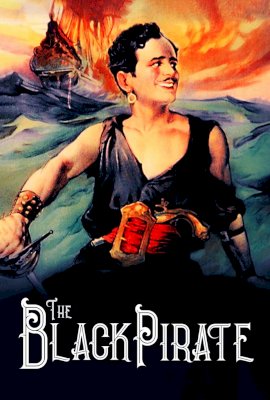
Top stardom came while she was swept up in the arms of the dashing Fairbanks as
the starry-eyed princess who is rescued by
Der schwarze Pirat (1926) in the
classic silent adventure. Billie was the first actress to receive a
color screen test via this pirate yarn. Lovingly dubbed "The American
Beauty" after appearing in the movie of the same title,
Was eine schöne Frau begehrt (1927)--in which she played a social-climbing hat check girl--her acting talent was considered modest. Her better pictures were those opposite
stronger male actors by stronger directors. Pioneer female director
Lois Weber fit the bill and brought out the
best in Billie in two of her films--The Marriage Clause (1926)
with Francis X. Bushman and
Sensation Seekers (1927).
Divorced from Willat in 1929, Billie was still at the peak of her
popularity with the advent of sound. The multi-millionaire
eccentric and (at that time) budding producer
Howard Hughes became an obsessed
admirer, which resulted in an all-consuming three-year affair. Hughes,
who tried to take over and control her career, actually proposed to the
star and they were briefly engaged. She abruptly ended the
relationship, however, when she was unable to handle his quirkiness and
long, unexplained absences. For Hughes she appeared on screen in the
dramatic The Age for Love (1931)
and comedic
Cock of the Air (1932).
In
Blondie of the Follies (1932),
the Marion Davies starrer, Dove was
dismayed when her third-billed role was "trimmed" and "reshaped" at the
urging of Davies' highly influential paramour
William Randolph Hearst (who happened to own Cosmopolitan Productions, which made the picture). This
was to be her last film; she retired from the screen shortly thereafter.
By 1933 she had remarried and focused on having a family. Married to
Robert Kenaston, a rancher, oil executive and real estate investor, they had one son (Robert Alan) and an adopted daughter (Gail). The couple divorced in 1970 after 37 years of marriage (he
died three years later). A third marriage to architect John Miller also
ended in divorce.
Other than an unbilled bit part of a nurse in the movie
König von Hawaii (1962) with
Charlton Heston, Dove never returned to
the screen. She was eventually transferred from her Rancho Mirage
(California) home to live out the rest of her life at the Motion
Picture & Television Country House and Hospital in Woodland Hills. The
nonagenarian died of pneumonia in 1997.