John Sinclair, born John St. Clair in Memphis, Tennessee, January 6
1900, began his movie career in a series of Biff Comedies, slap-stick,
physical comedies produced in the early 1920s. Sinclair (known then as
Johnnie St. Clair) had a sturdy build and soon became a stunt double.
The exact number of films for which he did stunts is hard to gauge
since stunt men of that period weren't credited.
One lost early film
Starvation Hunters (1926)dampened
his career. He donned a short fat mustache and a derby hat. His
resemblance to Charlie Chaplin did not help him at all; Hollywood had
room for only one Chaplin, and he never wore that same mustache again.
Sinclair is most famous for his stunt doubling for
W.C. Fields. In one of Fields' lost silent
comedies,
Two Flaming Youths (1927),
Sinclair saved Fields' life.
Fields was supposed to ride a bicycle up the ramp of a slowly backing
up truck. Fields looked away, misjudged his approach, missed the ramp
and banged his head on the undercarriage of the truck. Fields reported
that he knew the truck was still rolling, but couldn't move his body
out of the way. His neck was broken. Everyone on the set started
screaming at the truck driver to stop, but he didn't hear them, and
Sinclair dived to the ground and pulled Fields out of the way of the
approaching wheels.
His quick actions guaranteed him work in the future with Fields.
Working with Fields was difficult. Writing for Fields was impossible.
Fields hated writers. However, if one of his crew ever offered up a
good gag while preparing to film, Fields would walk over to that person
and hand him a hundred dollar bill. This is how Sinclair became a gag
writer for Fields. The most famous movies Sinclair wrote gags for were
Das ist geschenkt (1934)and
Man on the Flying Trapeze (1935)
although he contributed to more movies, but again gag writers were
mostly anonymous during this period of film history.
Sinclair, like Fields, loved his drink. One would think that because of
their working relationship and similar "hobby," that the two would have
been good friends, however, as much as Fields loved to drink, he hated
drunks. Sinclair, sadly, was a drunk.
Around 1930, Sinclair married one of Mack Sennet's bathing beauties, as
well as an up and coming comedy star,
Thelma Hill. Sadly, alcohol too would be
Hill's downfall.
Within two years Hill would leave movies to become Sinclair's housewife
and drinking partner.
In 1932 Sinclair got the role of Secretary of Labor in W. C. Fields'
Beine sind Gold wert (1932)."
He had one line and one stunt he did standing in for Fields. You can
spot when Sinclair stands in because his hair is darker than Fields and
Sinclair had a bit of side burns, whereas Fields did not.
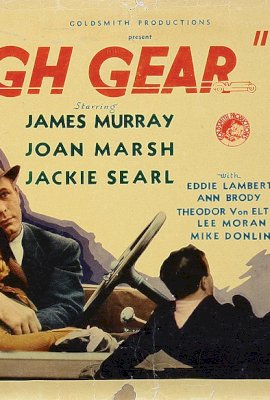
His next role, quite short, was as a heavy in the movie
High Gear (1933). But the one movie
everyone remembers him in was his next: W. C. Fields'
The Barber Shop (1933). Sinclair
was the poor sap, Mr Flugg, who got the shave. Sinclair also does the
one stunt at the end of the film, when Fields, riding a bicycle, falls
down the stairs, and the bad guy tumbles after him falling on top.
Sinclair wasn't quite as tall as Fields. To make them equal in height,
Fields wore shoes without heels, and Sinclair wore shoes with a
slightly taller than usual heel. You can spot the heels as he gets into
the barber chair, but they're even more prominent in the fall he takes.
Before the switch, when Sinclair is on the floor to where they cut and
then Fields is on the floor, you can see Sinclair's heels; after the
cut, you can see that Fields wears no heels. In this scene, Sinclair
also wears a plastic W. C. Fields mask.
In Poppy (1936), Sinclair wore that mask
too, only this time it was for about 75% of Fields' scenes, mostly long
shots. Fields was very ill during this period, so ill that it's been
said he gave up drinking for about a year, though others have said he
gave it up after the death of a friend who had died from drink. In
addition to his illness, Fields had trouble with his equilibrium. Every
few feet of walking he'd fall over. This happened so often that the
director placed people on the ground along his path to catch him when
he fell.
In one scene where Fields was to come through a window, then hide under
the sink because he heard someone enter the home. When the coast was
clear, he was to crawl out. During rehearsals, he tried again and again
to get out from under the sink but failed. The director finally said,
"Bill, let Sinclair do it. He's an old plumber and knows how it's
done." To which Sinclair responded graciously, "Sure, I never really
feel at ease anywhere else."
Though it was kept quiet in Hollywood, Southerland, the director,
admitted later that Sinclair was in nearly every shot except for the
close-ups saying, "I don't think Willie was in 25% of this picture."
Sinclair buried his wife, Thelma Hill in 1938. She had died from
complications of chronic alcoholism. This did not stop Sinclair's
drinking. He moved from his home, which was just minutes from the Mack
Sennett studios to an apartment on the corner of W Jefferson Blvd and
7th Ave in Los Angeles. He remarried, but it wasn't a happy marriage.
The jobs came slowly, his movie career started to falter, his parts
were still small and uncredited, and worst of all, he fell out of favor
with W. C. Fields, David Sharpe having taken his place as Fields' stunt
double.
The last we hear about Sinclair is from a short write-up in "Variety"
Feb 13, 1943, about his being hospitalized with head wounds and his new
wife, Vivian, being held on charges of assault.
Sinclair died on February 13, 1945 of cirrhosis of the liver, at the
age of 45. He is buried at Pierce Brothers Valhalla Memorial Park, in
North Hollywood in a grave marked only by a brass plate with nothing
engraved upon it.